
RESEARCH USE ONLY
This product is for R&D purposes only and is not approved for human or veterinary use.
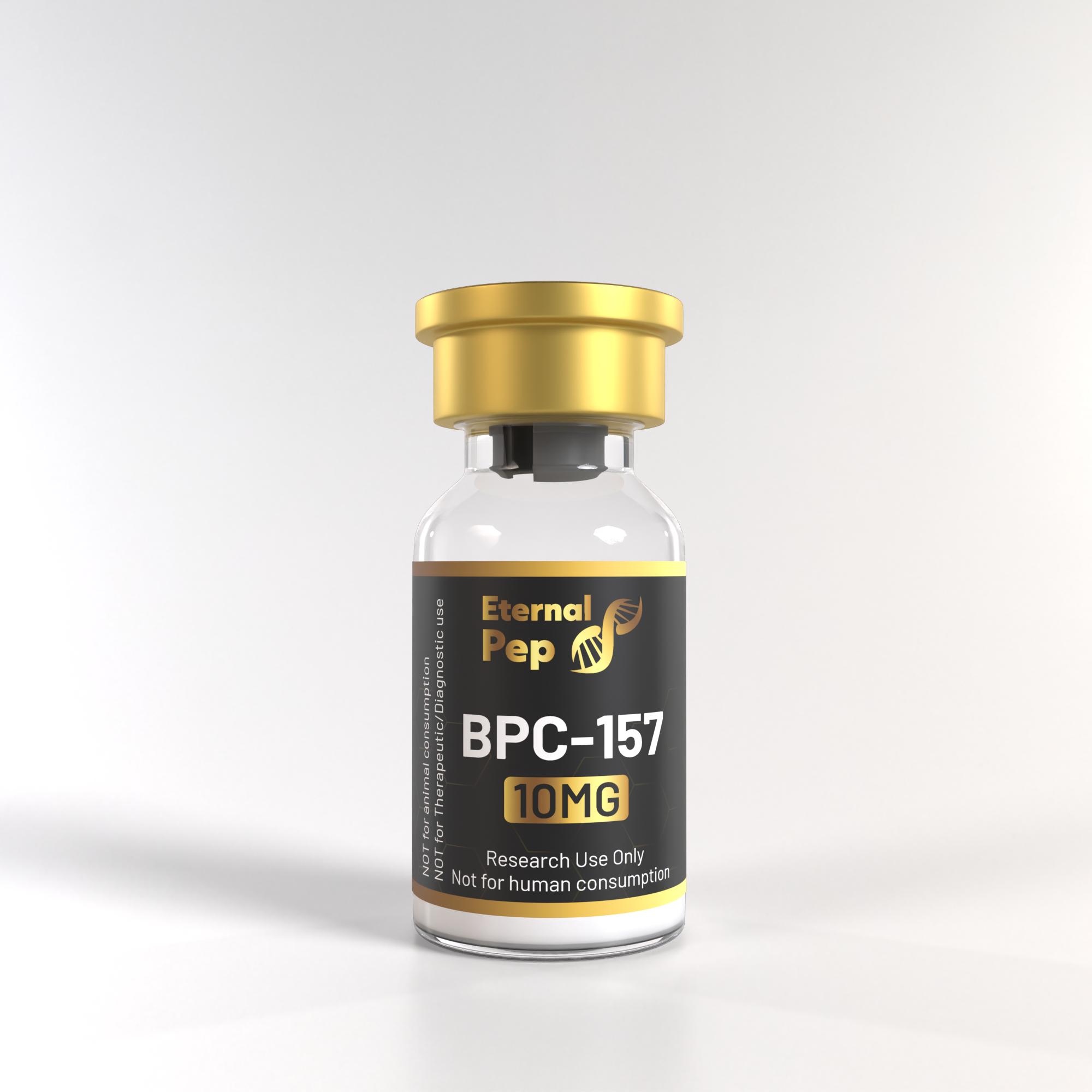
BPC-157 10MG
BPC 10MG is a synthetic peptide designed for research-use-only / laboratory-use context, intended for in vitro and in vivo experimental studies. This peptide is provided as a pure compound for scientific investigations only. For research use only.
$50.00
RESEARCH USE ONLY
This product is for R&D purposes only and is not approved for human or veterinary use.
Orders placed Monday-Friday will be shipped the next business day (Excludes Holidays)
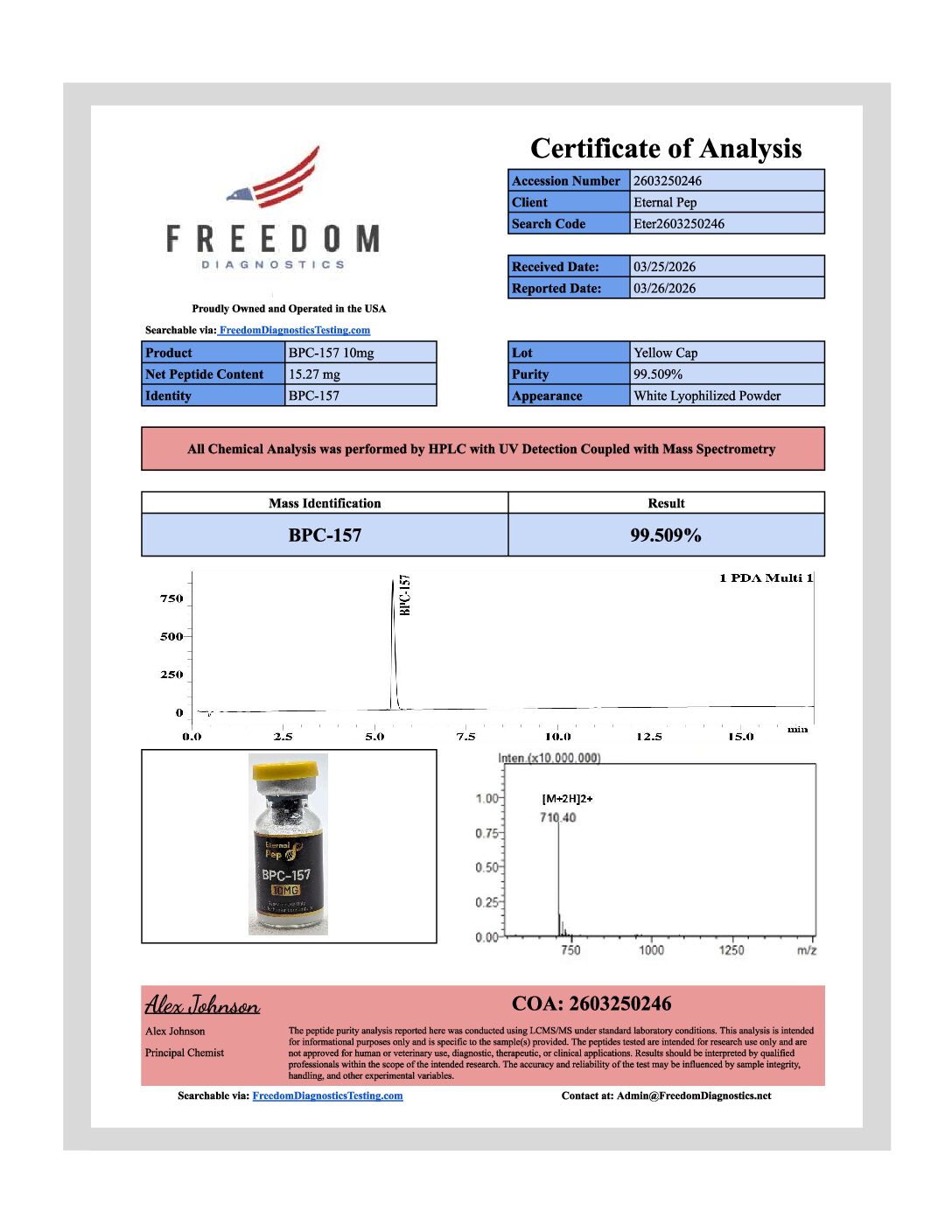
Trusted third-party testing ensures each batch’s purity and compliance with regulations.
Product List
Peptides
- 5-Amino-1MQ 50MG
- Acetic Acid 0.6% 3ML
- AOD9604 5MG
- Bacteriostatic WATER 10ML
- BPC-157 10MG
- CJC-1295 without DAC 10MG + Ipamorelin 10MG 20MG
- ELP-2 (T) 45MG
- Epitalon 40MG
- GHK-Cu
- Glow Blend 70MG
- Glutathione 1500MG
- HCG 5000IU
- HHB 150.3MG
- Ipamorelin 5MG
- Kisspeptin 10MG
- KPV 10MG
- MIC + B12 + NAD+ Blend (RUO)
- MOTS-C 40MG
- NAD+ 1000MG (Lyophilized Powder)
- Oxytocin Acetate 10MG
- PT-141 10MG
- Selank 10MG
- Semax 10MG
- Sermorelin 5MG
- SLU-PP-332 5MG
- SS-31 10MG
- TB-500 10MG
- Tesamorelin
- Thymosin Alpha-1 10MG
- Wolverine Stack
Product Usage Disclaimer
This product is solely intended for research purposes as a chemical compound. Its designation permits its use exclusively for in vitro testing and laboratory experimentation. All information regarding this product provided on our website is purely educational. By law, any form of bodily introduction of this product into humans or animals is strictly prohibited. It should only be handled by professionals who are licensed and qualified. This product is neither a drug, food, nor cosmetic and must not be misrepresented, misused, or mislabelled as such.
BPC-10MG
BPC-157 is a synthetic peptide sequence derived from bovine pituitary extract, designed for research applications. This product contains BPC-157 in a 10 mg concentration, intended exclusively for academic, industrial, or biochemical studies. BPC-157 is being explored in preclinical and basic research settings to investigate its potential effects on tissue repair and regeneration mechanisms.
Research Context
BPC-157, known for its truncated sequence (BPC, Brain-Protecting Compound), was initially identified through its beneficial effects in animal models of spinal cord injury, gastrointestinal healing, and wound repair. The peptide’s structure and mechanism of action have garnered interest in the scientific community for its ability to modulate inflammation and promote extracellular matrix remodeling.
Research Overview
BPC-157 has been extensively studied in preclinical settings, primarily in rodents and large animals, due to its potential therapeutic implications in tissue regeneration. Early findings suggest its capacity to enhance wound healing, reduce fibrosis, and support nervous system repair by mitigating oxidative stress and enhancing cellular proliferation. However, human clinical trials are not yet standard practice for this peptide, and its safety and efficacy in therapeutic applications remain under rigorous investigation.
Key Research Focus Areas
- Tissue Repair Mechanisms: BPC-157 has been explored for its role in promoting the regeneration of damaged tissues, including those affected by trauma or degenerative disease.
- Inflammation Regulation: Investigations focus on how BPC-157 may attenuate inflammatory responses, which is critical in conditions involving chronic inflammation or injury.
- Neuroprotection: Preliminary studies suggest potential neuroprotective effects, particularly in models of spinal cord injury and neurodegenerative diseases.
- Gastrointestinal Healing: Research has highlighted its benefits in accelerating mucosal repair and reducing gastrointestinal damage.
- Extracellular Matrix Remodeling: BPC-157’s ability to modulate extracellular matrix components is under study for its implications in wound healing and fibrosis mitigation.
Safety and Compliance
This product is provided for research purposes only and should be handled with the same caution as any biologically active compound. Researchers must adhere to institutional guidelines for peptide storage, handling, and disposal to ensure safety and compliance with applicable regulations. Proper documentation and record-keeping are mandatory when utilizing this material in experimental settings.
For research use only. Not for human or animal consumption.
RELATED PRODUCTS
Related products
-
Acetic Acid 0.6% 3ML
$5.00 -

Bacteriostatic WATER 10ML
$10.00 -
Epitalon 40MG
$80.00 -

Ipamorelin 5MG
$35.00

Reviews
There are no reviews yet.